


Fresh tip2017
8×
more natural plant compound on a freshly cut tip
Cut it fresh.
A freshly cut tip releases about 8 times more BITC than the same tip used a second time. That is why the kit has a cutter.


Natural fibres and mineral crystals that help lift surface stains. Keep your toothpaste.
Shop the kit · 34.99$Free US shipping over $40
ROOTED IN TRADITION · EXPLORED BY SCIENCE
Independent research on miswak. The institutions are not affiliated with Brushroot and do not endorse its products.
You brush. You sip a coffee. And it starts again.
Dark drinks, every day.
Curry, red wine, tobacco.
A yellow film settles on the enamel.
Back again after the next cup.
Brush, stain, repeat.
Coffee, tea, wine and tobacco contain coloured compounds called chromogens. Tannins help them cling to the thin protein film on your enamel. Cup after cup, they build up into yellow stains.


Natural fibres and tiny mineral crystals help lift surface stains from coffee and tea.
A miswak helps lift surface stains; it does not change the natural colour of your teeth.
| Criteria | Brushroot kit | A loose miswak stick | A plastic toothbrush |
|---|---|---|---|
| Plastic-free | Yes | Yes | No |
| Natural miswak sticks | 3 to 15 | 1 | No |
| Ventilated storage case | Yes | No | No |
| Tip cutter for a fresh tip | Yes | No | No |
| Step-by-step first-week guide | Yes | No | No |
| Thrown away every 3 to 4 months | No | No | Yes |
| Keep your toothpaste | Yes | Yes | Yes |
Whichever you choose, keep brushing with a fluoride toothpaste and see your dentist regularly.
A natural, woody, slightly peppery taste. Keep sessions short while you find the gesture.
Trimming and chewing feel natural. The fibres get softer as you learn the right pressure.
Part of your morning and evening. No plastic brush to replace.
Trim, use, store. Time for a refill when the stick gets short.
Results vary from person to person.
Ready in under a minute. Keep your toothpaste.
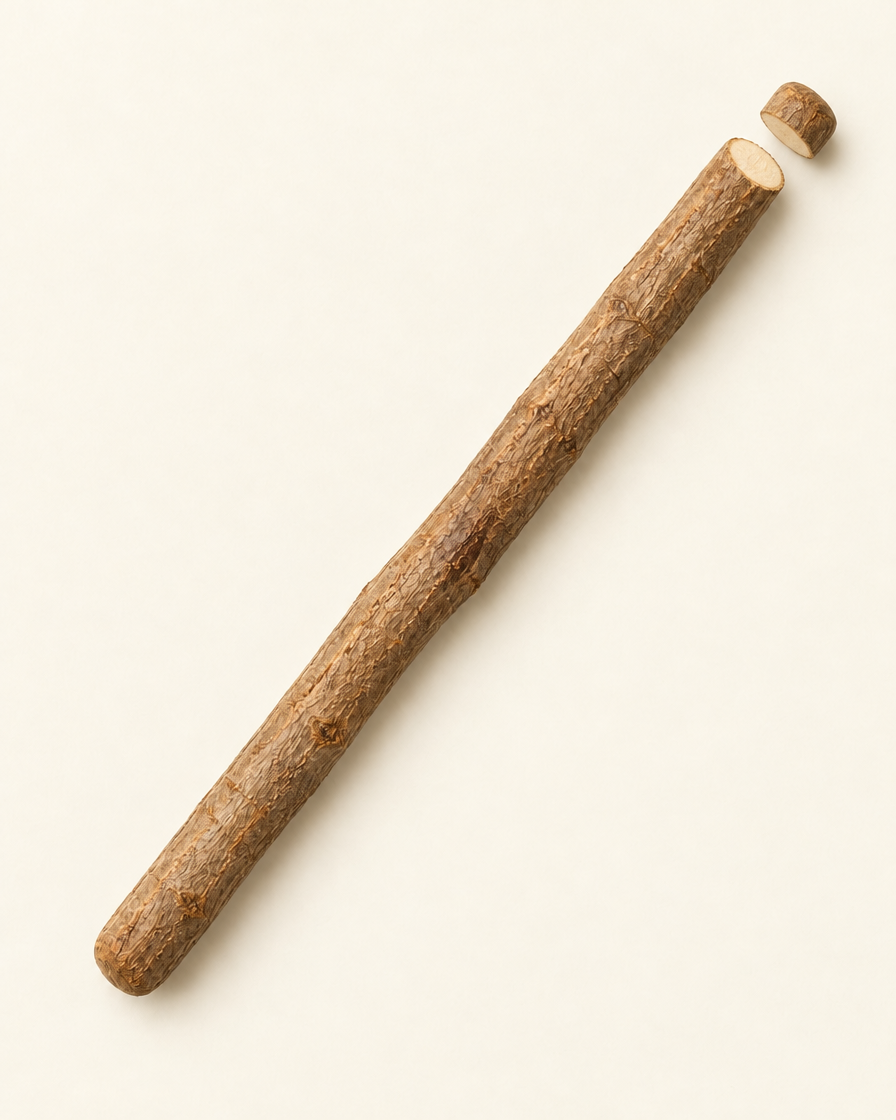
1Cut. Trim the tip with the cutter.
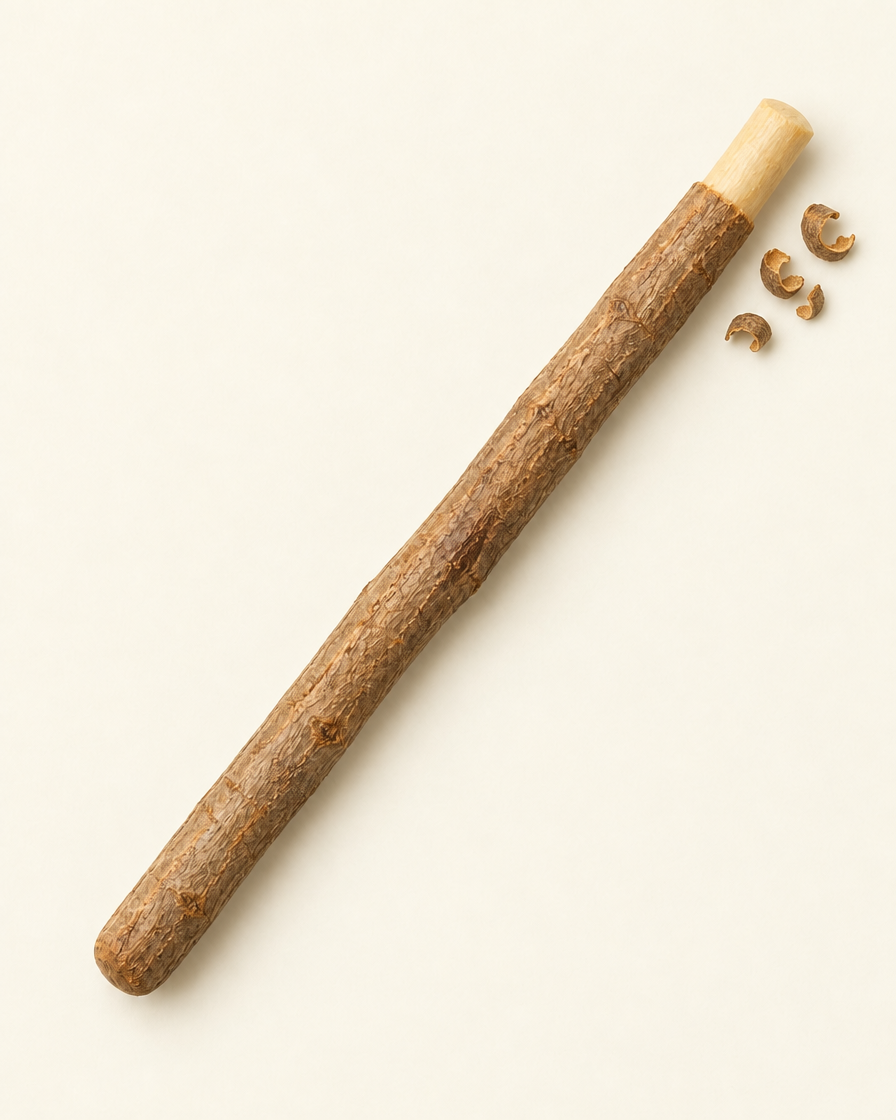
2Peel. Remove about 1 cm of bark around the tip.
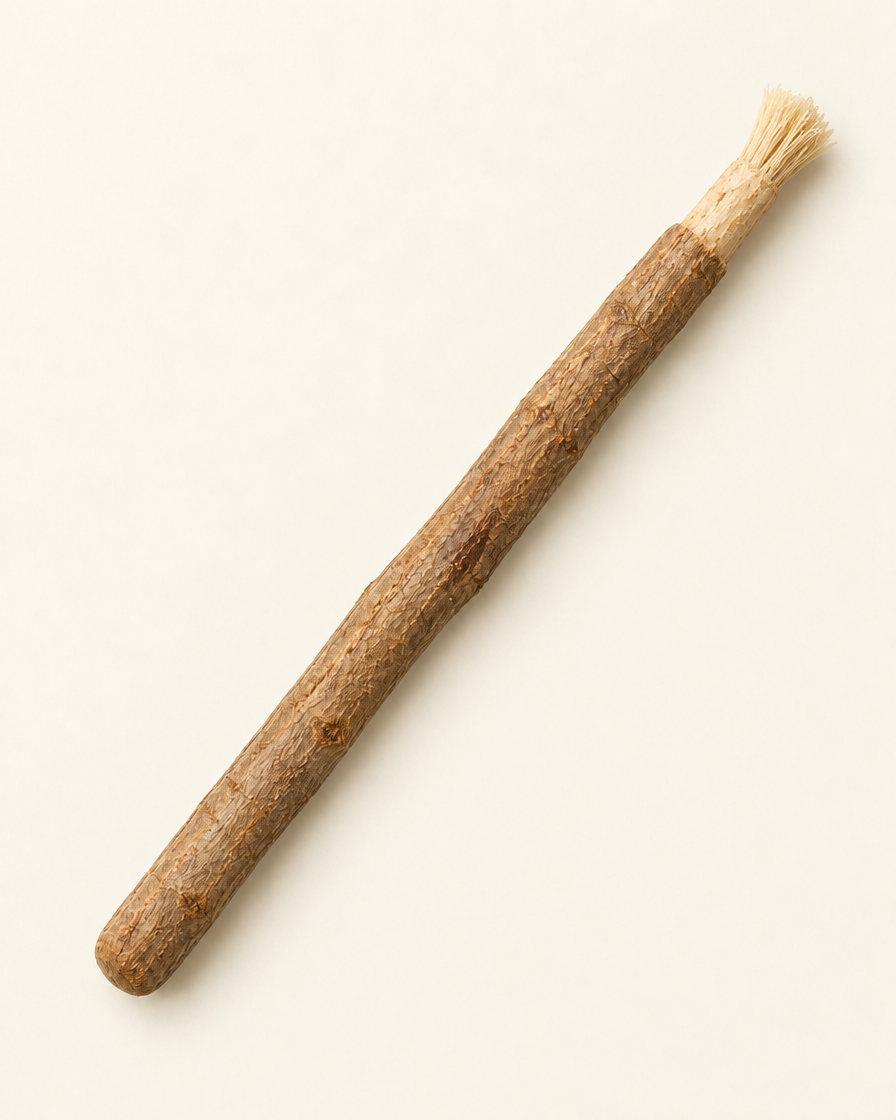
3Chew. Chew the tip gently until the fibres open into a soft brush.
8×
more natural plant compound on a freshly cut tip
A freshly cut tip releases about 8 times more BITC than the same tip used a second time. That is why the kit has a cutter.
9
clinical trials compared miswak with a toothbrush
Dental researchers pooled nine trials in one review. The key to good results: regular, correct use.
1 billion
plastic toothbrushes thrown away each year in the U.S.
An estimate based on the advice to replace your brush every three to four months.
26%
silicon in the tiny crystals inside the fibres
Silica is the same kind of polisher used in toothpastes. It helps lift surface stains.
Figures from published studies and estimates about miswak in general, not about our product. Keep your fluoride toothpaste and see your dentist regularly.
Swap your plastic toothbrush, keep your toothpaste.
